Topic: Scoping Reviews
Abstract
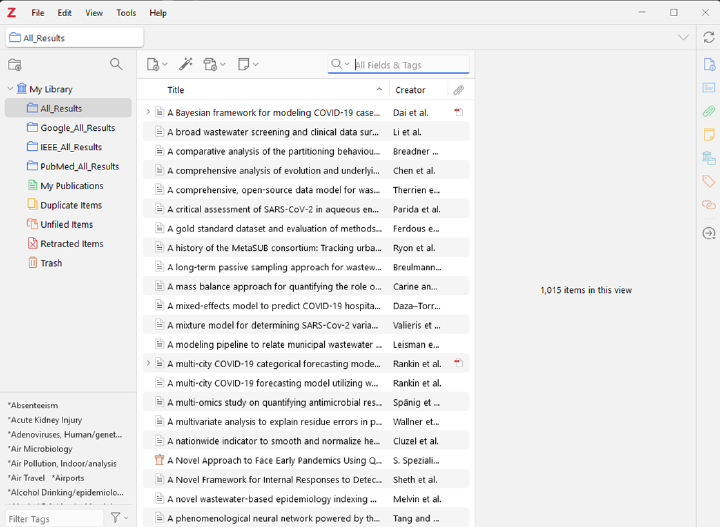
This presentation provides an overview of scoping reviews as a methodological framework for synthesizing knowledge in broad, complex, or emerging research areas. Scoping reviews follow a systematic and reproducible process to map existing evidence, identify dominant concepts, data sources, and methodological trends, and highlight gaps requiring further investigation. Unlike systematic reviews or meta-analyses, scoping reviews prioritize breadth over depth and do not aim to assess study quality or draw conclusions about effectiveness. The presentation outlines motivations for conducting scoping reviews, appropriate use cases, and practical tools for literature search, reference management, screening, and reporting, including PRISMA-ScR guidelines. An applied example focusing on wastewater-based epidemiology for COVID-19 illustrates the full workflow, from database search and screening criteria to preliminary synthesis of findings. Results reveal substantial variability in wastewater measurements, normalization strategies, modeling scales, and a scarcity of cross-region generalization studies. Overall, the presentation demonstrates how scoping reviews support early-stage research by clarifying field boundaries, avoiding redundancy, and providing an evidence-based rationale for new research directions.