Edge AI
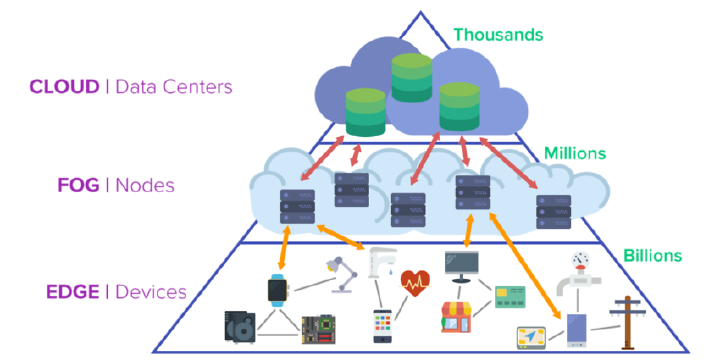
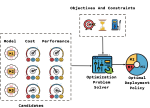
The stringent constrained resources available on tiny sensor nodes introduce a number of challenges regarding accuracy, power-efficiency, user-comfort, and security. These design considerations, however, often impose conflicting requirements. Thus, a comprehensive research approach to design future medical embedded systems and corresponding optimizations at different levels must consider these interdependent and conflicting requirements. We research methods of optimizing medical embedded systems for power-efficiency while taking into account other performance metrics. The goal is to develop tools, methodologies, and algorithms towards comprehensive approaches to address cross-layer optimization issues related to power, performance, user-comfort, and security.

Embedded Machine Intelligence Lab
Research Lab
At the Embedded Machine Intelligence Lab (EMIL) at Arizona State University, we develop next-generation AI, sensing, and digital health technologies that bridge the gap between algorithmic innovation and real-world clinical impact. Our research focuses on the design, development, and validation of robust, interactive, efficient, and trustworthy machine learning methods for real-world pervasive systems operating under dynamic and resource-constrained conditions.
Publications