Advances in Wastewater-Based Epidemiology
Abstract
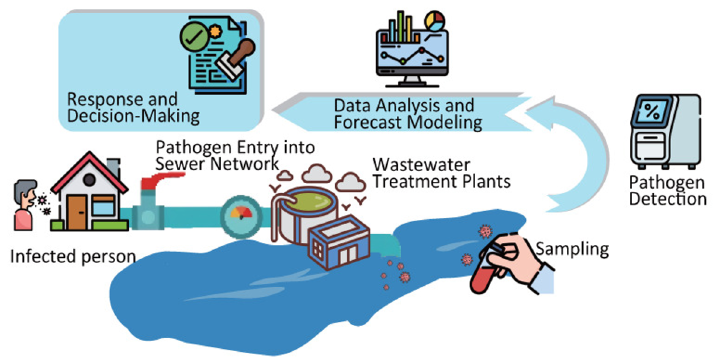
This presentation introduces wastewater-based epidemiology (WBE) as a methodological framework for monitoring population-level health through analysis of biological markers in wastewater systems. WBE integrates multiple components, including representative sampling of defined sewer catchments, laboratory-based pathogen detection using techniques such as quantitative PCR and sequencing, and data preprocessing steps to account for dilution, environmental variability, and system-level confounders. These processed data are then used in predictive modeling frameworks to estimate epidemiological outcomes such as infection prevalence, case trends, and early outbreak signals. The presentation highlights both traditional statistical approaches and machine learning models, including support vector regression, random forests, and neural networks, as tools for capturing relationships between wastewater signals and public health indicators. Applications of WBE include early detection of infection increases, continuous trend monitoring, and variant surveillance, while key challenges involve measurement uncertainty, lack of standardized protocols, and resource constraints. Overall, the presentation demonstrates how WBE serves as a complementary surveillance system and underscores the importance of pipeline-level understanding for developing robust and generalizable predictive models.